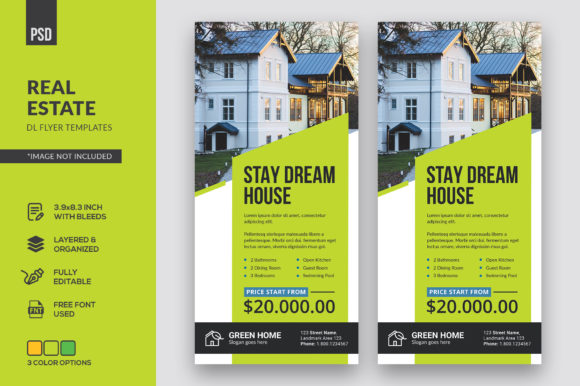
Real Estate DL Flyers: The Strategic Edge for Modern Property Marketing
In an era where digital notifications compete for every second of attention, the tangible impact of a well-crafted Real Estate DL Flyer remains undeniable. Direct mail has evolved far beyond simple postcards with generic property photos; it has transformed into a sophisticated marketing tool that bridges the gap between online research and physical reality. For professionals, creators, and business owners navigating the competitive landscape of property sales, the quality of the material in hand often dictates the first impression of a brand. This is where the strategic value of a dedicated design template becomes critical.
The modern real estate agent or agency understands that a listing is not just about square footage or location; it is about storytelling. A high-quality flyer tells that story instantly. When you utilize a resource like a premium Real Estate DL Flyers template, you are not merely printing paper; you are deploying a visual asset designed to convert interest into action. The relevance of this format today lies in its ability to cut through the noise of saturated social media feeds and email inboxes, offering a tactile experience that digital screens simply cannot replicate.
Why Organization Matters in Design Workflows
One of the most significant challenges faced by marketers, freelancers, and small business owners is time management. The pressure to produce high-volume content while maintaining a consistent brand identity can be overwhelming. This is why the structural integrity of a design file is just as important as the visual aesthetics. A template that claims to be "well organized and structured" addresses a fundamental pain point in the creative workflow: efficiency.
When a designer or an agent opens a file, they should not have to hunt for elements. They need immediate access to the components they require. In the context of Real Estate DL Flyers, this organization is paramount. Every element, from the contact information to the property highlights, must be accessible without disrupting the layout. A disorganized file leads to errors, wasted hours, and potentially costly reprints. Conversely, a file that groups layers logically allows for rapid customization. You can swap out a headline, update a phone number, or change a color scheme in minutes rather than hours. This speed is essential in a market where properties sell quickly and opportunities vanish overnight.
The Power of Smart Objects in Modern Editing
At the heart of an efficient editing process lies the use of Smart Objects. This feature is a game-changer for anyone working with Adobe Photoshop, which is the industry standard for print design. When a template utilizes Smart Objects for image containers, it fundamentally changes how users interact with the file. Instead of struggling to resize images, mask them correctly, or worry about resolution loss, users can simply double-click the layer to insert their own photo.
This capability ensures that high-resolution property photography maintains its clarity and sharpness, regardless of how many times the image is adjusted. For a Real Estate DL Flyer, image quality is non-negotiable. Blurry photos suggest a lack of professionalism and can deter potential buyers immediately. With Smart Objects, the template protects the integrity of your visuals while granting you the freedom to experiment with layouts. Whether you are a seasoned graphic designer or a busy real estate entrepreneur, this feature removes the technical barrier, allowing you to focus on the message rather than the mechanics of the software.
Meeting the Standards of Professional Print
Digital design is one thing, but print production introduces a completely different set of requirements. Colors behave differently on a screen versus on paper. Text legibility depends on ink density and paper texture. Ignoring these factors can result in a final product that looks dull, muddy, or unprofessional. This is why specifications like CMYK color mode, 300dpi resolution, and bleed inclusion are not just technical jargon—they are the pillars of quality assurance.
A template designed specifically for Real Estate DL Flyers adheres to these strict print standards. The 3.9x8.3 inch dimension is a classic size for direct mail, optimized for standard envelopes and easy handling by recipients. However, the true value lies in the pre-press preparation. By providing a file that is already set to CMYK and includes the necessary bleed, the template eliminates the risk of white edges appearing after trimming. It ensures that the vibrant colors intended by the designer translate accurately to the printed page.
Furthermore, the inclusion of fonts within the main file is a crucial detail. Typography defines the mood of the flyer. If a font used in the design is not installed on the user's computer, the text will default to a generic system font, ruining the visual hierarchy. A comprehensive package that includes all necessary free fonts guarantees that the final output matches the preview exactly. This level of preparation reflects a forward-thinking approach to design, acknowledging that the end-user needs a seamless transition from digital file to physical product.
Adapting to Changing Market Habits
The way people buy and sell homes has shifted dramatically over the last decade. While online listings dominate the initial search phase, the decision-making process often relies on deeper engagement. Potential buyers want to visualize themselves in a space, and a physical flyer provides a concrete anchor for those imaginations. Moreover, the demographic of homebuyers and investors is diverse, ranging from tech-savvy millennials to traditionalists who still prefer face-to-face interactions and tangible materials.
A well-executed Real Estate DL Flyer caters to this diversity. It serves as a conversation starter during open houses, a leave-behind after a showing, or a targeted piece sent to specific neighborhoods. The flexibility of an editable template allows agents to tailor their message to these varying audiences. For instance, a luxury property might require a minimalist design with ample white space, while a family-oriented development might benefit from warmer colors and community-focused imagery. The ability to fully edit text, colors, and images means the same base template can serve multiple campaigns without requiring a complete redesign from scratch.
Practical Implications for Business Owners and Creators
For the independent real estate professional or the small marketing agency, resources are often limited. Hiring a custom designer for every single listing is not always feasible. This is where the accessibility of a layered, organized template shines. It democratizes high-end design, putting professional-grade tools into the hands of those who need them most.
- Cost Efficiency: Investing in a single high-quality template saves money over time compared to commissioning custom designs for every project.
- Brand Consistency: Using a standardized structure helps build a recognizable brand identity across all marketing materials.
- Speed to Market: The ability to edit quickly means listings can go live faster, reducing the time a property sits on the market.
- Error Reduction: Organized layers and named groups minimize the chance of accidental edits that could compromise the layout.
The trend toward "print-ready" assets is also gaining traction as businesses seek to integrate omnichannel strategies. A flyer that looks great in print can also be easily converted for digital use, such as PDF attachments or social media graphics. The versatility of a properly structured PSD file makes it a multi-purpose asset. It is not just a static image; it is a dynamic tool that adapts to the evolving needs of a campaign.
Conclusion: The Value of a Thoughtful Template
Ultimately, the success of a real estate marketing campaign hinges on the quality of its execution. A Real Estate DL Flyer is more than just a piece of paper; it is a representation of the agent's competence and attention to detail. By choosing a template that prioritizes organization, features smart editing capabilities, and meets rigorous print standards, professionals ensure that their work stands out in a crowded marketplace.
The shift towards more efficient, user-friendly design tools reflects a broader understanding of the modern creator's needs. We no longer have time to struggle with complex workflows when we could be focusing on closing deals and serving clients. A template that is easy to edit, fully layered, and print-ready empowers users to take control of their branding. It transforms the tedious task of design into a streamlined process, allowing creativity to flourish. As the real estate market continues to evolve, the ability to adapt quickly and present a polished image will remain a decisive factor in achieving success.